


A Complete Guide for Engineers, Buyers, and Energy Professionals
Introduction
Within today's expansive and integrated electrical systems, power transformers operate as quiet, substantial protectors of how energy gets shared. These enormous pieces of electromagnetic equipment carry out one of electricity's most critical, albeit often overlooked, roles: effectively shifting electrical power between circuits by modifying voltage amounts. Absent power transformers, the electrical network we depend on would be impossible; electricity would lack the capacity to be conveyed across large areas, could not be safely supplied to residences and commercial spaces, and would fail to energize our contemporary society.
A power transformer is a high-voltage electrical device used to transfer electrical energy between two or more circuits through electromagnetic induction. It plays a central role in the transmission and distribution of electrical power, ensuring electricity can move efficiently from power plants to factories, businesses, and homes.
Power transformers are essential for modern power grids because they step up (increase) or step down (decrease) voltage levels, making electricity transmission safer, more efficient, and more stable.
Unlike smaller distribution or isolation transformers found in everyday electronics, power transformers are specifically designed for high-voltage, high-power applications in electrical transmission and distribution networks, typically handling voltages from 33 kV up to 765 kV and power ratings from several MVA (mega volt-amperes) to over 1,000 MVA.
How Does a Power Transformer Work?
The operation of a power transformer relies on Faraday's Law of Electromagnetic Induction:
1. Basic Principle: When alternating current flows through the primary winding, it creates a constantly changing magnetic field in the transformer core.
2. Energy Transfer: This changing magnetic field induces a voltage in the secondary winding.
3. Voltage Transformation: The ratio of input to output voltage is directly proportional to the ratio of turns in the primary and secondary windings:
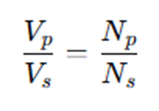
Where Vp and Vs are primary and secondary voltages, and Np and Ns are the number of turns in respective windings.
4. Current Adjustment: According to the conservation of energy (ignoring small losses), power input approximately equals power output:
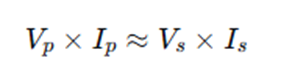
Thus, stepping up voltage results in stepping down current proportionally, and vice versa.
Types of Power Transformers
Based on Function:
Step-up Transformers: Increase voltage for efficient long-distance transmission (typically at generating stations)
Step-down Transformers: Decrease voltage for distribution and end-use (at substations and near consumption points)
Based on Construction:
Core-type Transformers: Windings surround a substantial part of the core
Shell-type Transformers: Core surrounds a substantial part of the windings
Based on Cooling Method:
Oil-immersed Transformers: Most common for outdoor applications
Dry-type Transformers: Used where fire safety is critical (indoor installations)
Based on Phase:
Single-phase Transformers: For smaller applications or as part of three-phase banks
Three-phase Transformers: Standard for power transmission and distribution
Applications in the Electrical Grid
Generation Side
· Generator step-up (GSU) transformers connect power plants to the transmission grid
· Unit auxiliary transformers power plant equipment
· Typically step up from 11-25 kV to 110-765 kV
Transmission Network
· Interconnecting transformers link different voltage transmission levels
· Autotransformers provide efficient voltage adjustment with shared windings
· Phase-shifting transformers control power flow between parallel paths
Distribution System
· Substation transformers step down transmission voltage to distribution levels
· Distribution transformers further reduce voltage for commercial and residential use
· Pole-mounted transformers serve individual neighborhoods
Industrial Applications
· Furnace transformers for high-current applications
· Rectifier transformers for HVDC conversion
· Specialized transformers for mining, manufacturing, and large facilities
Technical Specifications and Ratings
Power transformers are characterized by:
· Rated Power (kVA or MVA): Maximum continuous load capability
· Voltage Ratings (HV/LV): Primary and secondary voltage levels
· Impedance: Short-circuit impedance percentage (typically 8-12%)
· Vector Group: Winding connection configuration (e.g., Dyn11, YNd1)
· Cooling Class: Designation of cooling method (ONAN, OFAF, etc.)
· Efficiency: Typically 98-99.5% at full load
The Role of CEEG in Power Transformer Technology
As a leading manufacturer, CEEG provides advanced, reliable, and energy-efficient power transformers from 10 kV to 330 kV, including:
Oil-immersed power transformers
Turnkey Station with MV Transformer Integrated
Smart grid and renewable integration solutions
With decades of engineering experience, CEEG ensures stable performance, superior insulation systems, and long-term operational safety for global power projects.